

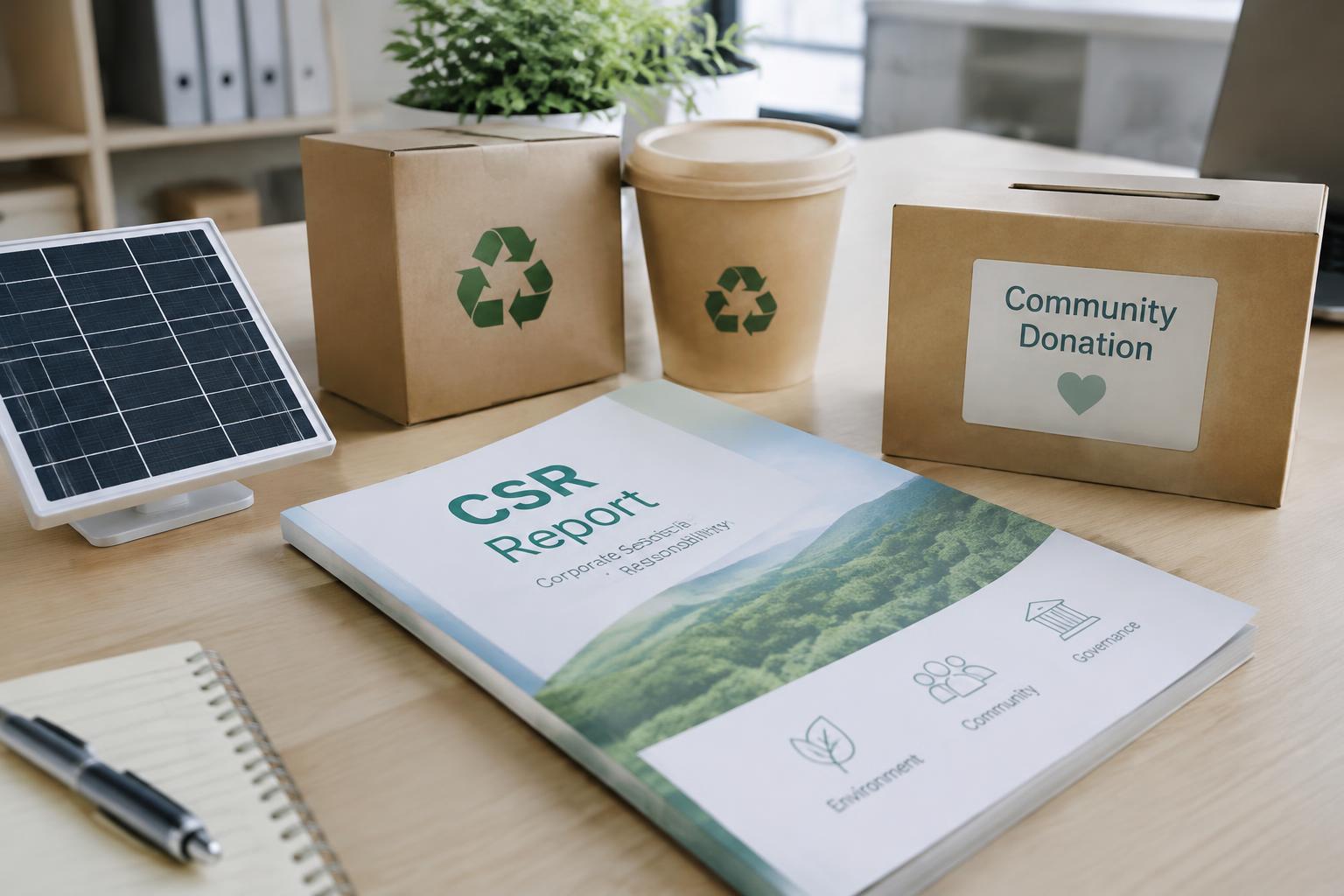
What are the principles of CSR?
Every business decision, from choosing a supplier to handling employee concerns, carries social and environmental consequences. Corporate social responsibility (CSR) gives you a framework for accounting for those effects alongside financial performance. Its principles include ethical conduct, respect for people and communities, environmental care, and transparent accountability, reflected in policies and daily operations.
Key Takeaways:
- CSR rests on accountability for a company’s effects on people, communities, and the environment, alongside its financial performance.
- Core principles include ethical conduct, respect for human rights, fair treatment of workers, environmental stewardship, and responsible relationships with suppliers and customers.
- Credible CSR requires clear governance, measurable commitments, transparent reporting, and accountability for progress and setbacks.
Defining Corporate Social Responsibility
CSR describes your company’s responsibility for the effects its decisions and operations have on society and the environment. That responsibility extends beyond the goods or services you sell to the way you source materials, manage facilities, and treat people connected to your business. The focus is on real-world impacts, including pollution from production, working conditions in a supply chain, and the consequences of business activity for nearby communities.
CSR’s scope and stakeholders
Your CSR scope includes both direct operations and business relationships, such as suppliers, contractors, and distributors. Stakeholders include employees, customers, local residents, investors, and others affected by company decisions. Their interests differ: workers may focus on safe conditions, while residents may be concerned about traffic or emissions near a facility. Mapping these connections clarifies whose rights and well-being are implicated by business activities, including outsourced manufacturing and product disposal.
How CSR differs from philanthropy and compliance
Charitable donations support causes, but CSR addresses the impacts built into how your company operates, such as wages, resource use, and product safety. Compliance means meeting applicable laws and regulations; CSR also examines effects that legal requirements may not fully address. A factory that meets emissions limits, for instance, still needs to assess its broader environmental footprint and its effects on neighbors. The distinction is between minimum legal duties, voluntary giving, and responsibility for operational impacts.
| Area | Primary focus | Example |
|---|---|---|
| CSR | Impacts of business activity | Assessing supplier working conditions |
| Philanthropy | Voluntary support for causes | Donating to a community food bank |
| Compliance | Meeting legal requirements | Following workplace safety regulations |
Core Principles of CSR
Across a company’s decisions, CSR principles set expectations for how responsibilities are recognized and how affected people are treated. They give you a basis for judging whether stated commitments match business conduct, from supplier contracts to customer communications. Accountability and transparency make decisions open to scrutiny, while ethical conduct and respect for stakeholders shape the choices behind them. These principles also place business activity within human rights protections and the rule of law.
Accountability and transparency
Clear accountability means you assign responsibility for CSR commitments to identifiable roles, such as a procurement director overseeing supplier standards. Transparent reporting then gives employees, investors, customers, and affected communities relevant information about policies, decisions, and performance. Reliable disclosure distinguishes confirmed results from targets and explains material gaps without obscuring them in broad claims. For instance, a company reporting a supplier audit should describe the scope and the corrective actions required.
Ethical behavior and respect for stakeholder interests
Ethical conduct requires you to apply consistent standards when commercial goals conflict with stakeholder interests. That includes avoiding bribery, misleading claims, conflicts of interest, and retaliation against people who raise concerns. Stakeholder respect means recognizing how decisions affect employees, customers, suppliers, and nearby communities, rather than treating them only as sources of risk or revenue. A purchasing team, for example, should assess whether contract terms impose unreasonable costs on smaller suppliers.
Respect for human rights and the rule of law
Respect for human rights starts with recognizing that workers and communities hold rights that business activity must not disregard. You are responsible for identifying and addressing risks such as forced labor, unsafe working conditions, discrimination, or interference with freedom of association across your operations and business relationships. Legal compliance provides a baseline, not a substitute for responsible conduct where local protections are weak. Labor contracts, workplace policies, and grievance channels should reflect applicable law and recognized rights.
- Record who approves CSR commitments and policy changes.
- Keep evidence that supports public sustainability claims.
- Disclose conflicts of interest in relevant decisions.
- Provide confidential channels for reporting misconduct.
Environmental and Social Responsibility in Practice
Responsible operations turn CSR commitments into everyday decisions about energy, materials, working conditions, and customer safety. Your purchasing, production, facilities, and service teams each affect environmental and social outcomes through choices such as selecting lower-impact packaging or preventing workplace injuries. Set practical expectations for those activities, then connect them to the people and places affected by your business. The specific actions differ by industry, from managing chemical storage at a factory to reducing food waste in a restaurant.
Environmental stewardship and sustainable resource use
Review how your sites consume electricity, water, fuel, and raw materials, then target avoidable waste at its source. A facility team can repair compressed-air leaks, install water-efficient fixtures, or reuse process heat, while product designers can specify recycled content and repairable components. Track resource use against production or service activity so growth does not disguise rising impacts. Preventing pollution also means handling solvents, batteries, and wastewater according to their risks and local requirements.
Fair labor, inclusion, and community well-being
Set clear standards for wages, working hours, health and safety, and respectful treatment across your workplaces. Supervisors need practical procedures for reporting hazards and discrimination, while hiring and promotion practices should give qualified candidates fair access regardless of background or disability. Your operations also affect nearby residents through traffic, noise, and demand for local services. Accessible grievance channels let workers and community members raise concerns without retaliation, including issues involving a subcontractor on site.
Responsible supply chains and consumer protection
Apply social and environmental expectations to suppliers through contract terms, risk-based assessments, and corrective action for identified problems. A buyer sourcing cotton, for instance, should examine labor conditions as well as water and chemical practices; a food retailer needs traceability for ingredients and allergen controls. Give customers accurate product information, clear warnings, and a usable route for complaints or recalls. Traceable sourcing records connect a product batch to its supplier and relevant safety documentation.
| Operational area | Practical action | Concrete focus |
|---|---|---|
| Facilities | Repair leaks and reduce unnecessary consumption | Energy and water use |
| Workplaces | Provide safety procedures and reporting channels | Fair treatment and hazard reporting |
| Supply chain | Assess suppliers and document corrective actions | Labor and environmental practices |
| Customer service | Maintain product warnings and complaint routes | Safety information and recalls |
Governance, Implementation, and Accountability
To make CSR commitments actionable, assign decision rights, define measures, and set out how results will be verified. Your governance structure should connect board oversight with operational responsibility, so a stated policy translates into purchasing rules, site procedures, and management reviews. Clear accountability also requires a record of who owns each commitment and how unresolved gaps are escalated. Without that structure, progress updates can describe activity without showing whether the organization met its obligations.
Leadership, policies, and due diligence
Board members set oversight expectations, while executives assign implementation to named functions such as procurement, human resources, or compliance. Your policies should define required conduct, approval routes, and consequences for breaches, then align supplier codes and internal procedures with those rules. Risk-based due diligence identifies potential harms across operations and business relationships, records how they are assessed, and documents corrective action. Keep evidence such as supplier assessments, training logs, and remediation records tied to accountable owners.
Targets, performance measurement, and reporting
Choose targets with a defined scope, baseline, owner, and review cycle, then select indicators that measure outcomes rather than activity alone. Your reporting should explain methods, boundaries, data limitations, and any missed target, not just highlight favorable results. Consistent measurement lets readers compare performance across reporting periods, while internal controls support accuracy before publication. A clear report might distinguish emissions from owned facilities from those associated with purchased electricity and disclose how each figure was calculated.
Stakeholder engagement and grievance mechanisms
Workers, suppliers, local communities, and other affected groups provide information that internal audits may miss. Set regular consultation channels and make complaint routes accessible in relevant languages, with options for confidential or anonymous submissions. Your process should define intake, investigation, response deadlines, and escalation, while protecting people from retaliation. Documented resolution includes the concern raised, action taken, and follow-up with the affected person; a case log can also reveal recurring issues at a particular facility.
- Assign a board committee to review CSR risks on its meeting agenda.
- Keep a version-controlled register of policies and approval dates.
- Record corrective-action deadlines and closure evidence in an audit trail.
Business Value and Long-Term Impact
Consistent CSR links your stated commitments to decisions about suppliers, hiring, product design, and investment. That connection gives employees, customers, and business partners a clearer basis for judging whether your conduct matches your claims. Over time, credible follow-through can support trust, reduce disruption when expectations change, and protect the value of customer and supplier relationships. The business case becomes clearer when you track outcomes such as supplier continuity, employee retention, and customer feedback.
Reputation and stakeholder confidence
Stakeholders judge your reputation through repeated actions, not campaign language. Publishing clear goals, naming the people responsible, and reporting progress against the same measures each year gives customers, employees, investors, and suppliers concrete evidence of performance. Consistent disclosure also makes setbacks easier to assess: a company that explains a missed target and its corrective steps gives partners more reason to trust its account than one that stays silent. For customers, that credibility can shape purchasing decisions.
Risk management and organizational resilience
Mapping environmental, labor, and governance risks across your operations and supply chain can expose issues before they interrupt production or damage relationships. A supplier review, worker grievance channel, or climate-related site assessment gives managers information to act on, such as qualifying an alternative source when a key supplier has weak labor controls. Early risk visibility supports continuity planning, while ignored complaints or unverified supplier claims can become costly sources of operational and reputational harm.
Aligning CSR with sustainable business strategy
CSR creates lasting business value when you connect commitments to core decisions rather than treating them as separate projects. A manufacturer, for example, can include energy use and material waste in product-design reviews, capital planning, and operational targets. Assigning each goal to a senior owner and reviewing progress alongside financial and operational results makes trade-offs visible to decision-makers. Strategic alignment keeps social and environmental priorities tied to measurable business choices, such as equipment upgrades and supplier contracts.
| Business area | CSR practice | Long-term value |
|---|---|---|
| Reputation | Report goals and progress consistently | Stronger stakeholder confidence |
| Risk management | Review suppliers and operational exposures | Fewer avoidable disruptions |
| Business strategy | Assign owners and track relevant targets | Better-informed investment decisions |
Conclusion
CSR rests on accountability, ethical conduct, respect for human rights, transparency, and attention to the effects your business has on people and the environment. Put these principles into practice through responsible sourcing, safe working conditions, lower-impact operations, and clear reporting on commitments and results. Treat CSR as part of your governance and daily decisions, not as a separate public relations exercise. When your policies align with measurable actions, stakeholders can assess your performance against specific responsibilities.
FAQ
What are the principles of CSR, and why do they matter to a business?
CSR principles guide how a company takes responsibility for its effects on people and the environment. They can support trust and resilience, but their business value depends on whether commitments are integrated into operations and followed through.
How much does it cost to implement CSR?
The cost depends on a company’s size, industry, existing practices, and goals. Some steps, such as setting clear responsibilities or improving stakeholder communication, may require limited spending, while environmental upgrades, supply chain checks, or new reporting systems can require greater investment.
What is the most common mistake companies make with CSR?
A common mistake is making public commitments without assigning responsibility, setting measurable goals, or checking results. The right approach depends on the company’s impacts, but credible action requires policies and targets that are tracked and updated as conditions change.