

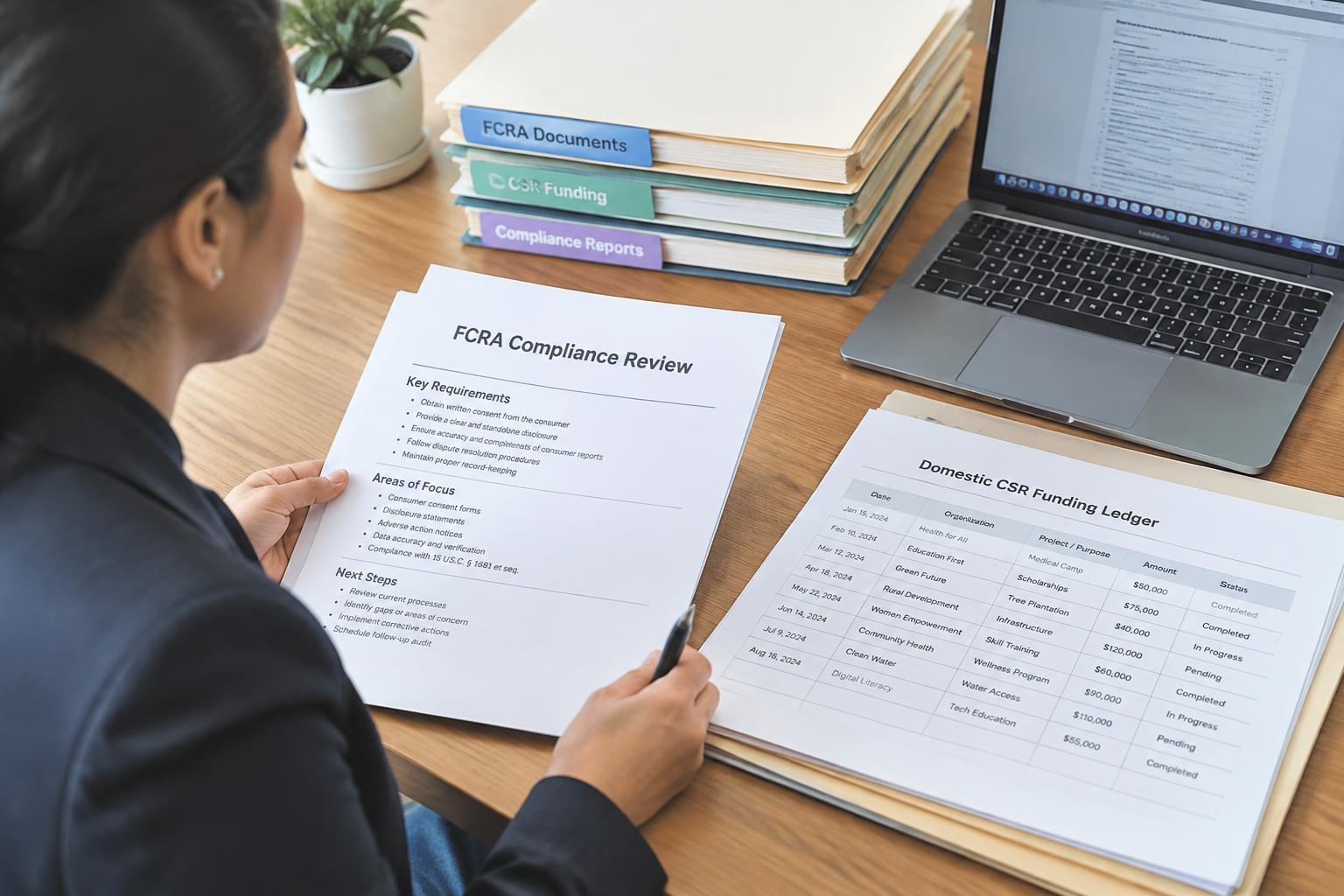
Navigating FCRA Compliance Alongside Domestic CSR Funding
CSR funding from an Indian company might look like a clean lane, but a donor’s ownership, source of funds, and control over spending matter under FCRA. I keep the distinction sharp: foreign contribution rules are strict, and domestic CSR money must not be mixed with foreign funds in the wrong account. Your grant agreement and bank records tell a real story, so trace every rupee.
Key Takeaways:
- FCRA applies to foreign contributions, not ordinary domestic CSR grants. An Indian nonprofit receiving foreign funds needs the required FCRA registration or prior permission before accepting them.
- Domestic CSR funding must come from an eligible Indian company under the Companies Act. A grant does not become foreign money just because a company has overseas investors or operates internationally.
- Keep separate bank accounts and ledgers for FCRA receipts and domestic CSR funds. Record each grant’s source, purpose, payment, and project expenses in the matching books.
- CSR paperwork should identify the Indian corporate donor, approved project, implementation agency, and grant conditions. Keep the board approval, CSR agreement, invoices, and utilization records together.
- Foreign-origin funds routed through an Indian intermediary can trigger FCRA concerns. Trace the funding source and retain bank statements and donor documents that show where each contribution came from.
FCRA Basics, Keep It Legit
I keep the foreign contribution rulebook front and center: money or other value from a foreign source falls under the Foreign Contribution (Regulation) Act, 2010, and its rules. Your nonprofit needs to identify the source, purpose, and route before accepting funds, because a wrong classification can turn a donation into a compliance mess. Source matters, and I treat donor records, agreements, and transfer details as the first beat in the paper trail.
Registration, Prior Permission, and the Right Account
Before your organization accepts foreign contributions, it needs FCRA registration or prior permission from the Ministry of Home Affairs. Registration suits eligible groups with a track record; prior permission ties approval to a named donor, amount, and project. I keep the funds in the designated FCRA account at SBI’s New Delhi Main Branch, then use permitted accounts for onward transfers and spending. Foreign money landing in an ordinary account is a red flag, not a harmless mix-up.
Reporting Duties and Red-Flag Moves
Each year, I file the required FCRA return, including a nil return when no foreign contribution came in, and retain records that match the filing. Your books should show receipts, donor details, purpose, and use without gaps. Off-book transfers, routing funds through an unauthorized person, or using contributions for a prohibited purpose can trigger suspension, cancellation, or penalties. I keep invoices, bank statements, and project ledgers tied to each foreign-funded expense.
- Confirm donor identity before accepting a transfer.
- Record the contribution’s intended purpose in writing.
- Reconcile bank entries against the general ledger.
Domestic CSR Cash, No Foreign Strings
I treat Indian corporate social responsibility funding as a domestic contribution when it comes from an Indian company’s CSR budget under Section 135 of the Companies Act, not from a foreign source. That source distinction matters under FCRA: CSR status alone does not turn Indian money into foreign contribution. Your project plan should name the company, the Indian account paying the grant, and the approved activity, keeping the origin of each rupee clear on the record.
| Funding point | Domestic CSR treatment | FCRA distinction |
|---|---|---|
| Source | Indian company’s CSR budget | Not foreign contribution solely because it is CSR |
| Basis | Companies Act CSR requirements | Source and nature of funds govern FCRA treatment |
| Purpose | Eligible CSR activity | CSR label does not override FCRA rules |
Who Can Receive CSR Support
Eligible recipients include a registered public trust, a registered society, or a Section 8 company, subject to the CSR Rules and the applicable registration requirements. I look for the recipient’s legal form, track record, and any required CSR-1 registration before a company releases its grant. CSR-1 registration is a key checkpoint for eligible implementing agencies, while the project agreement should identify the approved activity and the organization responsible for carrying it out.
CSR Rules, Reporting, and Fund Flow
Under the CSR Rules, companies document approved activities, board decisions, and spending through their CSR governance and reporting duties. I expect the grant agreement to set out the project purpose, milestones, and supporting records, with payments tied to the company’s approved CSR plan. Use the stated CSR purpose as the fund-flow reference, and keep invoices, bank entries, and utilization records linked to the grant, such as a payment for a named health clinic project.
Keep the Money Lanes Separate
I keep domestic CSR support and foreign contributions on separate money lanes, because the source of a rupee shapes how an organization must receive and use it. Your team should map each grant to its funding source, designated account, and approved purpose before spending begins. A shared program can still use both streams, but staff need clear allocation rules, such as assigning each invoice to the specific funding source that covers it.
Separate Accounts and Clear Records
For domestic CSR funds, I use a dedicated bank account or clearly distinct ledger coding, while foreign contributions follow the account structure required under FCRA. No commingling means staff do not move foreign funds through a domestic CSR account or charge one stream for the other’s costs. Your finance team can tag each budget line, purchase order, and payment voucher with its source, keeping a CSR-funded training venue distinct from an FCRA-funded activity.
Donor Checks and Funding Agreements
Before I accept a CSR grant, I verify the donor’s identity and whether the payment is genuinely from a domestic source, rather than routed from abroad. Trace the source through the agreement, remittance details, and donor declarations; the label “CSR” alone does not settle FCRA treatment. Your agreement should name the funder, permitted activities, payment route, and any conditions on use, so a domestic company’s grant stays distinct from a foreign contribution.
- Assign separate project codes in the accounting system.
- Limit bank access by role and funding stream.
- Use distinct invoice references for each grant.
Audit-Proof Paper Trail
I keep each CSR-funded activity tied to a clean record trail, so a reviewer can follow the money from the approved project to the work on the ground. Your file should show who authorized spending, what the funds covered, and how each payment connects to the project budget. Matching records matter, especially when invoices, bank entries, and activity notes tell the same story. A dated folder structure makes those links easy to trace.
Books, Utilization Certificates, and Annual Returns
For every receipt and expense, I match ledger entries with bank statements, invoices, payment proof, and project records, keeping domestic CSR funds clearly identified. Utilization certificates should reflect actual spending and carry the required sign-offs, not rounded estimates. I also reconcile the books against the annual return before filing, so figures and descriptions align across documents. Keep signed certificates alongside supporting vouchers, with the reporting period and project name visible on each file.
Internal Reviews and Board Oversight
Before the board reviews compliance, I prepare a concise pack with the budget, ledger reconciliation, project progress notes, and pending approvals. A finance lead can test sample payments against invoices and bank entries, while the project owner confirms that each cost matches approved work. Record the review date, attendees, questions, and resolutions in the minutes. Documented sign-offs create a clear trail from board oversight to the CSR project file.
| Record | Review step | What to match |
|---|---|---|
| Ledger and bank statement | Reconcile entries | Receipt and payment amounts |
| Invoices and vouchers | Sample expense checks | Vendor, date, and project purpose |
| Utilization certificate | Verify sign-offs | Reported use and supporting records |
| Board minutes | Confirm recorded review | Attendees, questions, and resolutions |
When Compliance Gets Shaky
Red flags tend to show up in ordinary paperwork, not just dramatic raids, so I watch how the grant moves from approval to bank statement. Your CSR agreement, board resolution, and payment records should tell the same story about the Indian recipient and the project. A mismatch can draw scrutiny, even without bad intent. I keep the basics tight and treat unexplained fund movement as a stop sign, not a minor admin slip.
Missed Filings and Unauthorized Transfers
Late annual returns, incomplete accounts, or missed required notices can put an FCRA registration or prior permission at risk. I flag transfers routed through an unapproved association, personal account, or intermediary as unauthorized movement, even if the cash is meant for the same project. You should also match each receipt to the relevant bank record and filing. A payment sent to a vendor by the wrong entity is a specific red flag to investigate.
Corrective Steps and Legal Support
Once I spot a filing gap or questionable transfer, I preserve bank statements, vouchers, contracts, and email approvals, then pause any disputed payment. Your finance lead should reconcile the ledger against the FCRA account and identify exactly who received the funds. For late or incorrect filings, get advice from an Indian lawyer familiar with FCRA before approaching the Ministry of Home Affairs or submitting a correction. Keep the corrected records and counsel’s written guidance together.
- Record the date each discrepancy was discovered.
- Save the original ledger before making adjustments.
- Separate disputed funds from routine project spending.
Stay Ready, Stay Solid
I keep the compliance rhythm steady by assigning clear owners, recording decisions, and giving each team a repeatable handoff. Finance tracks receipts and payments, program leads document project changes, and the compliance officer reviews records before they’re filed. That shared routine keeps approval paths visible when staff shift or a grant moves forward. I use a common register for open tasks, so your team can see who owns the next step and what document is still missing.
Staff Training and Approval Checks
New staff get a practical walkthrough of FCRA-related duties, including who reviews funding records and how to flag a concern. I pair that session with a written role guide, then ask each employee to confirm they know the escalation route. Before a payment or project commitment is approved, the designated reviewer checks the supporting documents and records the decision. One named approver for each step keeps sign-offs traceable in the organization’s file system.
Calendar Alerts and Regular Reconciliation
Shared calendar alerts keep filing dates, internal reviews, and reconciliation tasks on the team’s radar. I assign each reminder to a role, not just a person, so a staff change does not leave the task floating. Finance then matches entries in the accounting ledger against bank statements and supporting receipts, logging any mismatch for follow-up. A dated reconciliation record, with the reviewer’s name and resolution notes, gives the file a clear audit trail.
| Routine | Owner | Record to Keep |
|---|---|---|
| Staff orientation | Compliance officer | Role guide and acknowledgment |
| Approval review | Designated approver | Signed decision and supporting documents |
| Calendar alerts | Assigned role | Task log with completion date |
| Account reconciliation | Finance team | Ledger match and discrepancy notes |
Conclusion
I keep FCRA compliance and domestic CSR funding in separate lanes, with clear records showing where each rupee came from and how it moved. You can keep the paper trail clean through distinct bank accounts, board approvals, project budgets, and receipts tied to each payment. Your team stays on solid ground when CSR funds carry no foreign contribution strings, and FCRA funds follow their own rules. My closing move is simple: match every transfer to its source, purpose, and supporting document.
FAQ
How do I handle FCRA compliance alongside domestic CSR funding?
Keep foreign contributions and domestic CSR funds in separate, clearly documented lanes. FCRA registration or prior permission applies to foreign contributions, not domestic CSR money, and each fund must be used according to its own rules and donor terms. Check the source and conditions before accepting or transferring funds.
What are the risks of mixing CSR funds with foreign donations?
Mixing funds or making unauthorized transfers can lead to compliance problems, scrutiny, and corrective action. Keep separate accounts and records, and confirm that each transfer and expense is allowed under the relevant rules and funding agreement. If a mistake happens, get qualified legal or compliance advice promptly.
How much time does FCRA and CSR compliance take for an Indian nonprofit?
The time depends on the organization’s funding activity, records, approvals, and reporting obligations. A reliable routine includes checking donor terms, reconciling accounts, tracking deadlines, and reviewing filings; foreign contributions may also require registration or prior permission before receipt. Build in extra time when records need correction or an approval is pending.