

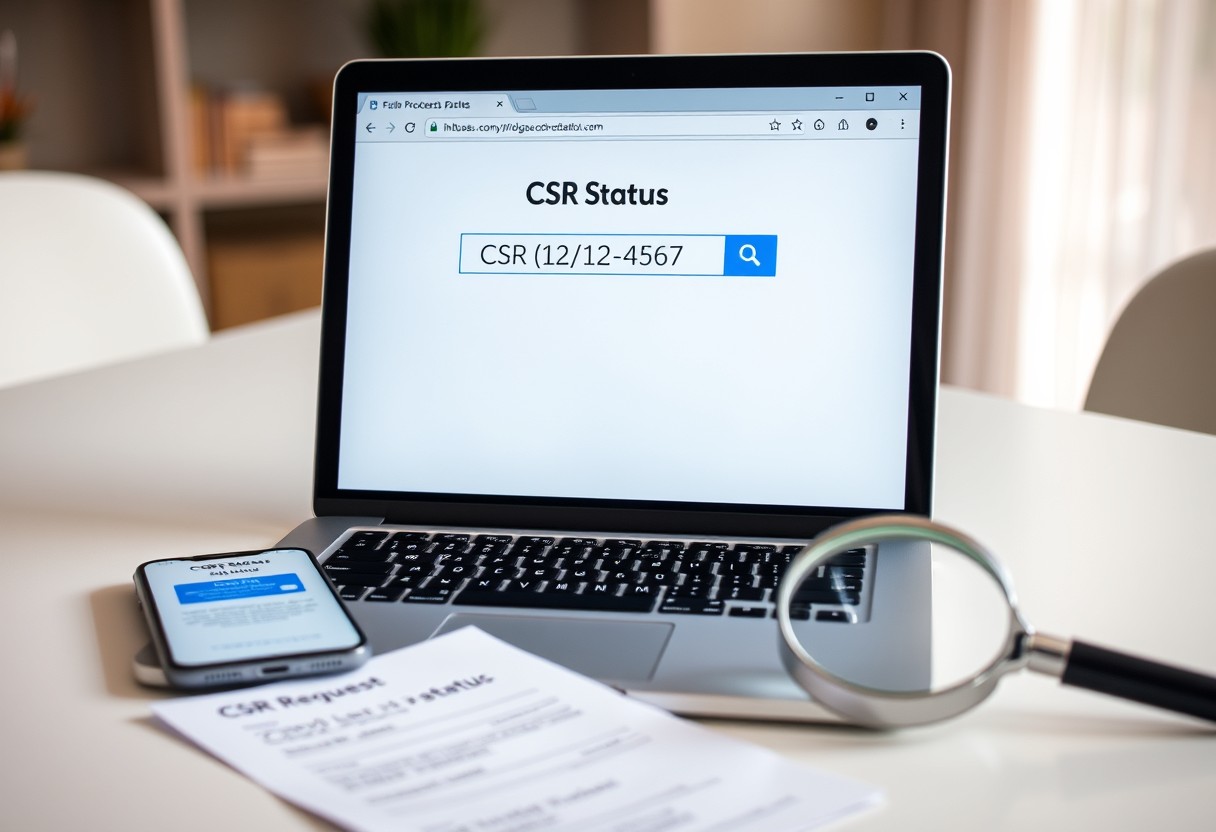
how to check csr status online
I’ve helped countless professionals verify corporate social responsibility (CSR) standings, and I know how easy it is to land on misleading sites. You need accurate, up-to-date information-especially when your organization is evaluating partners or reporting to stakeholders. I always emphasize using official government or accredited third-party platforms, because unofficial sources can display outdated or falsified data that puts your decisions at risk. With just a few correct steps, you can access reliable CSR status details in minutes.
Over the years, I’ve refined a straightforward method that eliminates guesswork. You don’t need special tools or subscriptions-just the right approach. I’ll walk you through exactly where to look and what details to prioritize so you avoid common pitfalls. The positive outcome? Confidence in your findings and protection from reputational or compliance risks tied to incorrect CSR assessments.
Key Takeaways:
- CSR status checks start with identifying the official reporting platform used by the company, such as a dedicated sustainability page or a recognized ESG disclosure framework like GRI or CDP.
- Real-time CSR data can often be accessed through regulatory filings, third-party ESG rating agencies, or corporate websites that publish annual impact reports and audit summaries.
- Verification matters-cross-reference the information found online with independent sources, including news outlets, nonprofit watchdogs, or government databases, to confirm accuracy and avoid outdated or self-reported claims.
Identifying Official CSR Reporting Platforms
Government-mandated transparency portals
I rely on official government portals to verify a company’s CSR compliance because these platforms host legally required disclosures. In many countries, regulatory bodies operate centralized databases where businesses must file sustainability reports, social impact assessments, and environmental compliance records. You can access these through national securities commissions, environmental agencies, or commerce ministries, depending on local mandates. The most reliable portals clearly label CSR or ESG filings and are often integrated with business registration systems. I always confirm the domain ends in .gov or another official country-specific extension to avoid counterfeit sites. Fraudulent platforms mimicking government websites are a real risk, so I double-check URLs through official ministry pages rather than third-party links. These portals sometimes offer multilingual interfaces and downloadable archives, making it easier to track a company’s reporting history over time.
Searching within these systems typically requires a registered business name or identification number. I’ve found that some governments include advanced filters for CSR-specific disclosures, such as community development spending or carbon emissions. Not every jurisdiction requires public access to these records, so transparency levels vary significantly by region. In countries with strong disclosure laws, you may view detailed project outcomes and third-party audit summaries. When available, I use the portal’s timestamp and document verification features to ensure I’m reviewing the latest submission. These official sources carry the highest credibility because they reflect regulatory enforcement, not voluntary disclosure.
Corporate investor relations and sustainability pages
I often turn to a company’s official investor relations website when checking CSR status because public firms are required to disclose material sustainability risks. These pages typically host annual CSR or ESG reports, board-level governance updates, and progress on global goals like the UN SDGs. You’ll usually find them under sections labeled “Sustainability,” “Responsibility,” or “ESG,” often linked in the site’s footer or main navigation. I look for reports that follow recognized frameworks like GRI, SASB, or TCFD, as these indicate a higher standard of disclosure. Companies that publish independently verified reports demonstrate greater accountability, so I check for auditor signatures or assurance statements. These documents are not government filings but still offer valuable insights when cross-referenced with official data.
While these pages are curated by the company, I use them to identify specific initiatives, funding allocations, and long-term commitments. You should pay attention to whether reports are updated annually and whether past versions remain accessible. I’ve noticed that transparent organizations clearly separate marketing content from data-rich disclosures. Some firms embed interactive dashboards showing real-time metrics, such as energy reduction or diversity statistics, which can be more informative than static PDFs. Always verify claims here against regulatory filings, as investor-facing pages may emphasize positive outcomes while omitting compliance shortcomings.
How-To Guide: Searching for Real-Time CSR Status
Accessing up-to-date CSR status begins with understanding how to use the official digital portal effectively. I rely on direct navigation through government or regulatory agency websites that maintain public CSR databases. You’ll typically find a dedicated search interface where real-time updates are published as soon as they’re processed. The key is knowing exactly which identifier your target company uses in the system, as search functionality depends on precise matching. I always ensure my internet connection is stable and use updated browsers to avoid timeouts or data loading errors. Submitting incomplete or outdated identifiers can result in false negatives, so accuracy at this stage prevents wasted effort downstream.
Data freshness varies by jurisdiction, but most platforms display timestamps indicating when the last update occurred. I check these timestamps carefully because a status from six months ago won’t reflect current compliance standing. Some portals also show pending reviews or recent filings, giving you insight into active CSR activity. A live status marked “Under Review” suggests the company’s submission is being evaluated, not rejected. This distinction matters when assessing reliability. I avoid third-party aggregators at this stage since they may lag behind primary sources. Direct access ensures you see what regulators see-no filters, no delays.
Locating the unique company identification number
Every company registered for CSR reporting carries a unique identification number assigned during formal registration. I start by checking the firm’s official website, usually under ‘About Us’ or ‘Legal’ sections, where they often publish their registration details. Alternatively, I retrieve it from previously filed annual reports or statutory disclosures, which are publicly accessible through business registries. This number is non-negotiable-it’s the only reliable key to unlocking accurate CSR data. Using a wrong or expired ID leads to failed searches or misleading results, so I double-check every digit before proceeding.
You might also find the identification number on invoices, tax filings, or press releases related to corporate governance. In cases where the company operates under a parent entity, I verify whether the subsidiary has its own separate ID or shares the parent’s. Some national portals allow reverse lookup using the company name, but I treat this as a preliminary step-final verification must always be done using the official number. Mistaking a tax ID for a CSR-specific code is a common error that blocks successful retrieval. I keep a secure note of confirmed IDs for future reference, especially when monitoring multiple organizations over time.
Inputting parameters into the online search filter
The search interface on most official portals requires exact input formats to return valid results. I enter the company identification number first, making sure there are no extra spaces or formatting errors that could disrupt the query. Some systems require additional fields like registration year, region, or sector code-omitting these triggers an error even with a correct ID. I follow on-screen prompts precisely, selecting dropdown options that match the company’s profile. One misplaced character can yield “No Records Found,” even if the company is fully compliant, so I review each field before submission.
After entering all required parameters, I click the search button and wait for the system to process the request. Instant results appear in most well-maintained databases, displaying the current CSR status alongside relevant filing dates and validation codes. I avoid using advanced filters unless necessary, as they can unintentionally exclude valid entries. If the system allows, I download the result page for documentation. A confirmed “Active” status appears in green text on many platforms, offering immediate visual confirmation. This moment gives me confidence that the data I’m viewing is both official and current.
Critical Factors Influencing a Company’s CSR Rating
Assessing a company’s CSR rating requires a close look at the measurable impact it has on society and the environment. I focus on transparency, consistency, and third-party validation when reviewing reports. A company that discloses detailed data about emissions, supply chain practices, and community initiatives demonstrates accountability. You should prioritize organizations that publish annual sustainability reports verified by recognized standards. Without verified disclosures, claims about social responsibility may lack credibility. I’ve found that stakeholders increasingly demand concrete evidence over vague promises.
Performance in key areas determines how highly a company ranks in CSR evaluations. These include environmental stewardship, labor ethics, governance, and community engagement. You can spot meaningful commitment by reviewing specific outcomes rather than general statements. For example, a firm reducing its water usage by 30% over five years shows measurable progress. I pay attention to how leadership integrates ethical values into core operations, not just side initiatives. This integration often separates genuine efforts from public relations campaigns.
Environmental sustainability and carbon footprints
When I evaluate environmental sustainability, I start by analyzing a company’s carbon footprint disclosures. You should look for specifics: total greenhouse gas emissions broken into Scope 1, 2, and 3 categories, energy efficiency improvements, and renewable energy adoption. A company that sources 80% of its power from wind or solar sends a strong signal of long-term environmental responsibility. I’ve seen firms claim sustainability while omitting supply chain emissions-this omission can hide a much larger impact.
Reduction targets matter just as much as current data. I track whether a company has set science-based goals aligned with limiting global warming to 1.5°C. You’ll find that leading organizations commit to net-zero timelines supported by annual progress reports. I consider a lack of third-party audits a dangerous red flag, as self-reported numbers can be misleading. Real sustainability isn’t just about planting trees-it’s about transforming operations to reduce harm at the source.
Ethical labor practices and community investment
I judge ethical labor practices by examining wages, working conditions, diversity policies, and employee safety records. You should check whether a company pays a living wage across its supply chain, not just at headquarters. I’ve reviewed reports where contractors in developing countries faced unsafe environments despite corporate claims of fairness. Third-party certifications like Fair Trade or B Corp status add credibility. A company that publishes workforce demographics and inclusion metrics shows a positive commitment to equity.
Community investment goes beyond charitable donations. I look for sustained programs in education, health, or local development that align with a company’s operations. You can spot superficial efforts when funding disappears after a PR crisis. I value long-term partnerships with local organizations and measurable outcomes, such as improved graduation rates or job training completion. When a business reinvests profits into neighborhoods it operates in, it builds trust. This kind of engagement reflects a genuine sense of responsibility, not just a line item in a report.
Pro Tips for Validating Online CSR Data
Third-party verification plays a critical role in confirming the authenticity of a company’s self-reported CSR data. I rely on independent NGO audits because they offer an unbiased lens through which corporate claims are tested against rigorous standards. You can’t always trust what appears on a company’s sustainability webpage-some firms engage in greenwashing by exaggerating or fabricating their environmental or social impact. That’s why I cross-check claims with reports from organizations like Global Witness, CDP, or the Fair Labor Association. These groups conduct on-the-ground assessments and publish findings that either support or challenge public disclosures.
- Verify audit dates to ensure assessments are current and relevant
- Look for named auditors and their accreditation status
- Check whether the audit covers all operational regions or only select facilities
- Review whether findings include corrective action plans for identified issues
Cross-referencing with independent NGO audits
When I evaluate a company’s CSR status, I always search for audits conducted by reputable non-governmental organizations. These reports often uncover discrepancies that official summaries omit, such as labor violations in supply chains or unverified carbon offset claims. I’ve found that NGOs like Transparency International and Rainforest Alliance publish detailed field investigations, giving you access to unfiltered evidence about a company’s real-world impact. Their methodologies are transparent, and their independence reduces the risk of biased outcomes.
You strengthen your assessment by comparing a firm’s public statements with these external evaluations. For example, a company might claim “zero deforestation” practices, but an NGO audit could reveal recent forest clearance linked to its suppliers. I treat such contradictions as red flags requiring deeper scrutiny. Accessing these reports is usually free through the NGO’s website, and many include scorecards or ratings that simplify complex data. Relying on this layer of validation ensures you’re not misled by polished narratives lacking substance.
Checking for recent global certification updates
Certification standards evolve, and I make it a habit to confirm whether a company’s credentials reflect the latest requirements. I’ve seen cases where firms display outdated logos from B Corp, Fair Trade, or ISO 14001, suggesting compliance that no longer exists. You need to visit the official certification body’s database to verify active status-don’t rely solely on a badge on a homepage. Some certifications require annual renewals or unannounced audits, and failure to meet updated benchmarks results in suspension.
I check for recent updates because global standards often tighten in response to emerging risks. For instance, the 2023 revisions to SA8000 placed stronger emphasis on mental health and worker voice, rendering older compliance efforts insufficient. You can stay current by subscribing to newsletters from certification bodies or using platforms like EcoVadis and Sustainalytics, which track certification changes across industries. Spotting a lapse in certification isn’t just about accuracy-it reveals whether a company prioritizes continuous improvement or merely performs symbolic compliance.
Troubleshooting Common Access and Accuracy Issues
Occasionally, you might find that the CSR status page fails to load or returns an error. I’ve encountered this when government databases undergo maintenance or experience unexpected outages. In such cases, the most dangerous mistake is assuming the data is invalid or that your company’s status has changed. Instead, I verify whether the platform has posted scheduled downtime notices or service alerts on its official communication channels. If no announcement exists, I wait a few hours and try again-most systems resolve transient issues automatically. You can also contact technical support directly through verified channels, but avoid entering sensitive credentials on third-party sites claiming to offer real-time access.
When links to CSR reports expire or redirect incorrectly, it’s usually due to outdated bookmarks or URL changes after site updates. I always double-check the domain and path through the official portal rather than relying on saved links. Bookmarking the main dashboard and navigating from there saves time and reduces errors. You should treat any broken link not as a system failure but as a routine update signal-refreshing your access path ensures continued reliability.
Handling database synchronization delays
Database synchronization delays can mislead you into thinking your CSR status hasn’t been updated, even after submitting required documents. I once waited over 48 hours for a status change to reflect, despite timely submission. These lags occur when multiple government systems exchange data across departments, and real-time updates are not guaranteed. Instead of resubmitting or assuming failure, I recommend logging in periodically to check for changes while keeping your submission receipt handy. Some platforms only update once per day during off-peak hours, so patience backed by documentation is key.
You might notice discrepancies between your internal records and the public database. This typically resolves itself within a few business days. I avoid raising support tickets prematurely because overreporting minor delays can slow down response times for urgent cases. Instead, I set a reminder to recheck after 72 hours. If the status still hasn’t updated, I then escalate with proof of submission. Understanding that synchronization isn’t instant helps you respond calmly and accurately.
Resolving incorrect search query results
Incorrect CSR search results often stem from minor input errors or system misinterpretations. I discovered that entering a company name with slight variations-like “Corp” instead of “Corporation”-can return no results or point to unrelated entities. The system treats these as distinct entries, so precision matters. To avoid confusion, I always use the exact legal name as registered with the official authority. Copying and pasting directly from incorporation documents eliminates guesswork and reduces failed searches significantly.
Another issue I’ve faced is outdated or cached results appearing in search queries. You might see an old CSR rating or status that doesn’t reflect recent compliance updates. This usually happens when the platform fails to purge obsolete data after an audit. I resolve this by clearing my browser cache or trying the search on an incognito window to force a fresh lookup. If the error persists, I contact support with a direct link to the incorrect entry. Providing specific details speeds up corrections and ensures your standing is accurately represented.
Conclusion
I’ve walked you through each step of checking CSR status online, from identifying legitimate reporting platforms to interpreting the factors that shape a company’s rating. You now know how to locate official disclosures, assess data accuracy, and recognize red flags in publicly available information. I’ve emphasized real-time access methods and validation techniques so you can act confidently when evaluating a company’s social responsibility claims.
When you encounter inconsistent or missing data, use the troubleshooting strategies I outlined to verify sources or request updated reports directly from the organization. I’ve seen cases where a mid-sized SaaS firm improved stakeholder trust simply by clarifying outdated CSR metrics on its website. Your ability to independently confirm this information strengthens transparency and accountability. I recommend revisiting CSR status periodically, as these ratings evolve with new initiatives, audits, and public feedback. With the tools and insights you now have, assessing corporate responsibility becomes a straightforward, informed process.
FAQ
Q: How can I check the current CSR status of a company online?
A: Start by visiting the official regulatory website where businesses report corporate social responsibility data. In the U.S., this information is often available through the Securities and Exchange Commission’s EDGAR database. Enter the company’s name or ticker symbol in the search bar to pull up filings related to sustainability, ESG reports, or annual disclosures. Many firms also publish CSR summaries directly on their websites, typically under sections labeled “Sustainability,” “Responsibility,” or “About Us.” Look for recent reports with timestamps to ensure you’re reviewing up-to-date information.
Q: Are third-party CSR rating platforms reliable for checking a company’s status?
A: Some third-party platforms like MSCI ESG Ratings, Sustainalytics, and CSRHub offer detailed assessments based on public data, audits, and industry benchmarks. These sites can provide quick overviews and comparative scores, especially useful for investors or researchers. However, ratings may vary between platforms due to differing methodologies. A mid-sized SaaS firm might score highly on environmental practices at one site but receive a lower mark on labor policies elsewhere. For accuracy, cross-reference these ratings with official filings or direct company disclosures to confirm findings.
Q: What should I do if I can’t find a company’s CSR status online?
A: Smaller businesses or private companies may not publish formal CSR reports. In such cases, check for press releases, blog updates, or community engagement announcements on the company’s official website. You can also contact their investor relations or public affairs department directly to request documentation. Another option is to review industry-specific databases or nonprofit watchdog groups that track ethical practices within certain sectors, such as Fair Labor Association for manufacturing or Green Business Certification Inc. for sustainability credentials.