

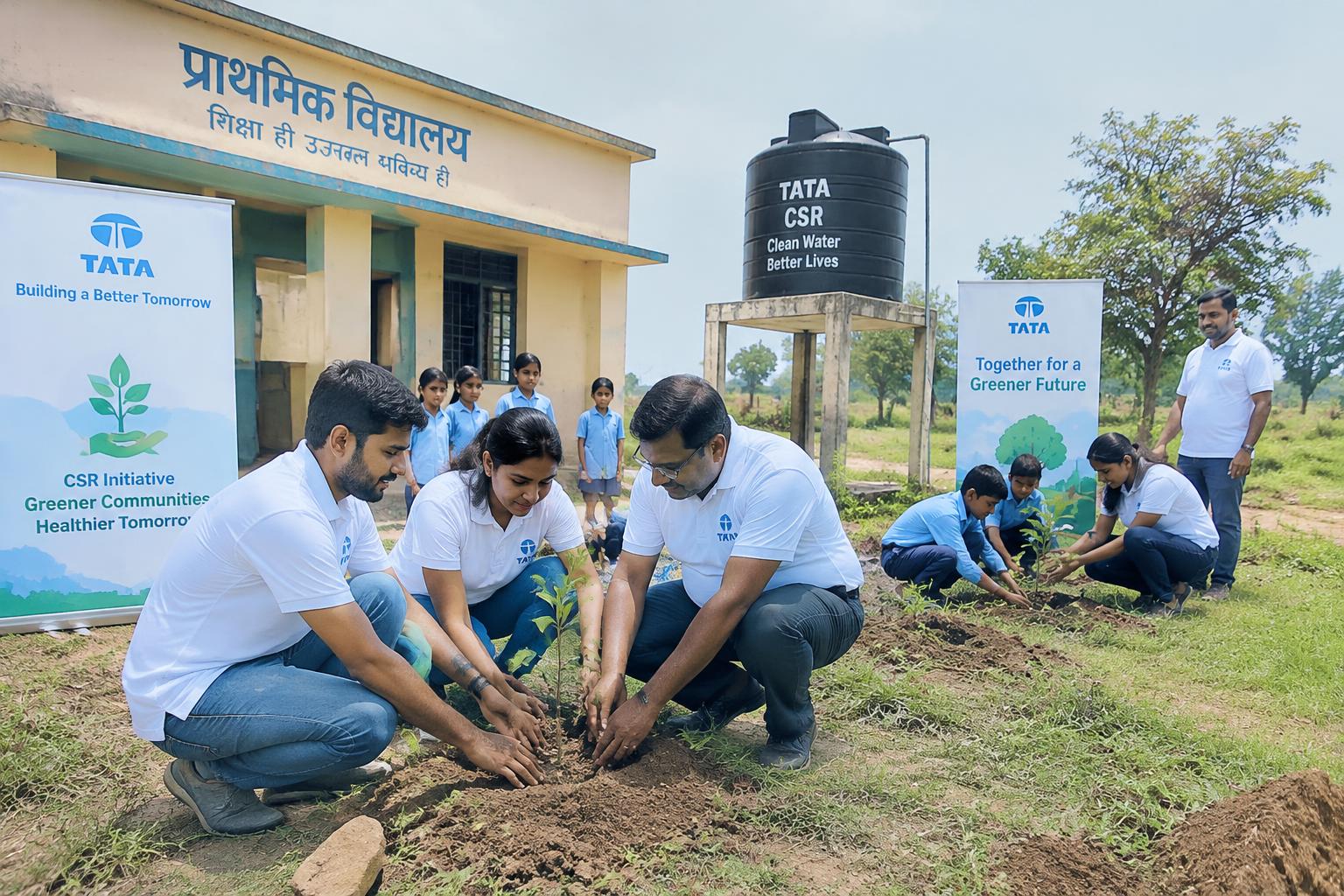
What are examples of CSR activities in India?
From installing village water systems to funding vocational training, companies in India direct corporate social responsibility (CSR) spending toward practical community needs. Under the Companies Act, 2013, qualifying businesses must meet prescribed CSR requirements, making accountable community investment more than voluntary philanthropy. You will see activities ranging from school improvements to watershed restoration, with projects shaped by local needs and documented outcomes.
Key Takeaways:
- Indian companies undertake CSR activities in education and skills training, including school infrastructure, digital learning, vocational courses, and apprenticeships.
- Healthcare and sanitation projects include mobile medical clinics, nutrition programmes, safe drinking-water systems, and community toilets.
- Environmental and livelihood initiatives include watershed restoration, tree planting, solar lighting, women’s self-help groups, and support for local enterprises.
Education and Skill Development
Learning That Connects to Work
CSR-funded programmes support learning through classroom materials, digital labs, scholarships, and teacher training in government schools. You may also see companies equip vocational centres with tools for trades such as electrical work, tailoring, or computer operations. Strong programmes link instruction to recognised qualifications and practical assessment, giving learners a clearer route from study to employable skills.
Training for Local Opportunities
At a skill centre, you can receive hands-on training in areas such as retail, manufacturing, or customer service, alongside workplace communication and interview practice. CSR partners often coordinate with employers to align course content with local vacancies, while placement support connects graduates with apprenticeships or entry-level roles. Useful programme measures include course completion, certification, and whether trainees secure work related to their training.
- Provide accessible learning materials in local languages.
- Offer career counselling and aptitude assessments.
- Train instructors in practical, competency-based teaching.
- Maintain workshop equipment for regular hands-on use.
Healthcare, Nutrition, and Sanitation
Corporate health programmes often bring primary care closer to communities through mobile medical units, screening camps, and referrals to local hospitals. You may encounter services for maternal health, diabetes, eye care, or vaccination, with trained clinicians recording findings and directing patients to follow-up care. Early screening can identify conditions before they become emergencies, while a referral system connects patients who need tests or specialist treatment with nearby facilities.
| CSR activity | Community service | Typical delivery point |
|---|---|---|
| Mobile medical unit | Basic consultations and screening | Village or neighbourhood visit |
| Maternal health programme | Antenatal checks and referral support | Community clinic |
| Nutrition initiative | Supplementary meals and nutrition counselling | Anganwadi centre |
| Sanitation project | Toilets, handwashing facilities, and hygiene education | School or community facility |
Nutrition and Sanitation Services
Nutrition initiatives commonly support children and mothers through supplementary meals, growth monitoring, and counselling delivered with anganwadi workers. You may also see companies equip schools with safe drinking-water points, functional toilets, and handwashing stations, alongside hygiene sessions that demonstrate proper handwashing. Reliable access to facilities matters: a school toilet requires water, maintenance, and clear responsibility for repairs, while a nutrition programme can track a child’s growth using routine height and weight measurements.
Environmental Sustainability
Conservation, Clean Energy, and Pollution Control
Corporate environmental programmes in India fund native tree restoration, watershed protection, and biodiversity monitoring, with local ecologists tracking survival rather than simply counting saplings planted. Clean-energy projects include rooftop solar installations at public facilities and solar-powered equipment that reduces reliance on diesel generators. Companies also support pollution control through wastewater treatment upgrades, air-quality monitoring, and safer handling of industrial waste, addressing specific sources such as untreated effluent entering rivers.
- Restore mangroves along vulnerable coastlines.
- Install rainwater-harvesting systems on institutional buildings.
- Replace inefficient streetlights with LED fixtures.
- Set up material-recovery facilities for recyclable waste.
Rural Development and Community Infrastructure
Village Facilities and Essential Services
Village infrastructure projects address practical gaps in access to water, roads, sanitation, and public spaces. Your CSR funding can support rainwater harvesting structures, repair local roads, install solar streetlights, or equip a community centre. Reliable village facilities reduce travel barriers and make daily services more accessible, particularly where households are far from town centres. A functioning hand pump, for instance, depends on sound drainage and a local maintenance plan.
| Infrastructure | Typical CSR activity | Community benefit |
|---|---|---|
| Water access | Rainwater harvesting or water-system repairs | More dependable local water supply |
| Village roads | Road construction or resurfacing | Improved access to nearby services |
| Public lighting | Solar streetlight installation | Better visibility on village routes |
| Community spaces | Repair or equip a shared facility | Usable space for local gatherings |
Planning and Maintenance
Local panchayats and village committees can identify priority works, confirm land access, and set responsibilities for upkeep before construction begins. Your CSR programme can fund technical assessments, durable materials, and maintenance training alongside the asset itself. Clear maintenance roles matter: a village water committee, for example, can track pump repairs and arrange timely servicing, while project records document who is responsible for each facility.
Women’s Empowerment and Livelihoods
Equality, Employment, and Enterprise
CSR programmes support women’s economic equality through vocational training, job placement, and access to enterprise resources. You might encounter training in tailoring, food processing, digital services, or solar equipment maintenance, paired with workplace-readiness sessions. Fair access to paid work also depends on practical measures such as safe transport, childcare, and equal-pay policies. For entrepreneurs, seed funding and market links can turn a home-based food business into a registered supplier.
- Self-help group bookkeeping and loan records
- Mentoring for women entering technical trades
- Business registration and compliance support
- Procurement opportunities for women-owned firms
Building Sustainable Livelihoods
With local market connections, training can lead to reliable income rather than a certificate alone. A CSR-supported programme might connect women artisans with retail buyers, or train community health workers for paid roles with local organisations. Your assessment of impact can track job retention, wage progression, business revenue, and women’s participation in decision-making, alongside the number of people trained. These measures show whether a livelihood continues beyond the initial course or grant.
Disaster Relief and Heritage Preservation
Emergency response and cultural preservation
During floods, cyclones, or earthquakes, CSR teams can fund immediate relief such as food, clean water, temporary shelters, medicines, and debris removal, working with district authorities and experienced relief organisations. Once urgent needs are addressed, support often shifts to restoring damaged public assets and livelihoods. Companies also fund heritage conservation, including traditional building repairs, archival protection, and restoration of historic sites, using conservation specialists and locally appropriate materials such as lime mortar.
| CSR activity | Typical support | Key consideration |
|---|---|---|
| Emergency relief | Food, water, shelter, and medicines | Coordinate with local authorities |
| Recovery and rebuilding | Repairs to community assets and homes | Use hazard-aware designs |
| Heritage conservation | Repairs to historic structures and records | Engage qualified conservation specialists |
Final Words
Across India, corporate social responsibility takes practical forms, from funding school facilities and mobile health services to supporting watershed restoration, sanitation, women’s self-help groups, and village roads. Your understanding of a company’s CSR work should include both the activity and the community it serves, such as a skills programme linked to local employment needs. Under India’s CSR framework, eligible companies plan and report qualifying expenditure, making education, healthcare, environmental projects, and rural infrastructure familiar examples.
FAQ
What are examples of CSR activities in India that companies can support?
Companies in India can support education, healthcare, environmental protection, rural infrastructure, livelihoods, disaster relief, and heritage preservation through CSR activities. The right choice depends on community needs, the company’s capabilities, and whether a credible implementing partner can deliver and monitor the work.
How much does a CSR project cost in India?
A CSR project’s cost in India depends on its scope, location, duration, and delivery model. Companies should budget for implementation, ongoing maintenance, and monitoring, since a one-time contribution may not sustain services or benefits after the project ends.
How can a company avoid common mistakes when choosing a CSR project?
A company can reduce common CSR project risks by assessing local needs, setting clear outcomes, and checking an implementing partner’s experience before committing funds. Projects are more likely to be useful when communities help shape them and when the company plans for follow-up, rather than choosing an activity only for visibility.